Comments

Koen:

When reading your book review, I was able to easily identify a rough summary of your book without reading any spoilers or hints. Furthermore, albeit the summary of the book isn’t detailed, I was able to feel the passion you have for this book. The way you described your emotions when reading the book really intrigued my curiosity and interest to read your novel. Overall, your novel review not only gave me a rough and basic understanding of the book you presented, but it also sparked my desire to read this novel.

Henry:

Henry, when reading your prompt about time, as a reader I was able to fully relate with your thoughts and ideas. I thoroughly enjoyed hearing your thoughts about this topic because as I read through your prompt, I thought to myself, “Hey, I agree with you!” and “Hey, I have experienced this too!”. Furthermore, I appreciated the way you noted towards the end certain results or studies that explain the ‘timing’ effect you have mentioned. Overall, I really enjoyed the content of this prompt as it allowed me to reflect on how I view time in my life.

Jacob:

Jacob, I enjoyed reading your twist story as the ending was unexpected and unforeseen. The twist didn’t come until the last few sentences, which brought to your writing high intensity and shock. However, although your ending was startling, you could have added a bit more depth into it. Rather than just throwing a twist into your story, it may be helpful to add minor details or dialogue which relates to the final act of your story. Overall, your writing is organized and interesting, but there could be more depth to your twist and content. Keep up the good work. 

Jay:

Jay, I really enjoyed reading your descriptive essay and learning about the experience you have had with golf. Normally I wouldn’t expect golf to evoke such emotions from someone, but the way you expressed your thoughts in a descriptive manner helped increase the intensity of both your essay and golf as a sport. Furthermore, I really enjoyed the metaphors and similes you used such as “sweating like a waterfall” or references to Neil Armstrong. It allowed me to develop a picture of your appearance or emotion at that moment. However, there are some parts that felt rushed or underwhelming compared to the rest of your writing. For example, you only wrote in detail about your first hole and prize while the other parts felt lacking (“After giving myself a pat on the shoulder, I moved on to the next hole and then the next and the next. Everything went by like a breeze when I suddenly realized that I was done with all eighteen holes.”). It may be helpful to either mention more about your second to the eighteenth hole to scrap the sentence altogether. Overall, I thoroughly enjoyed reading your essay as I was able to clearly identify your thoughts and emotions throughout the piece. 

Yiu Yue

Hey Yiu Yiu, your credo was very interesting and really amusing. If I can recall, I think I was there when you accidentally ‘slipped’! Anyhow, I really enjoyed the way presented your Credo, with so much detail on the emotions you went through this experience. Furthermore, I found it hilarious when you tried to justify swearing by calling it a plan (“I would like to think that this was all part of a plan! If this never happened, I would still be like my 7th grade self today.”) I appreciate you sharing your topic, as I think it is very relevant in both my life and other student’s lives. Not only did we get a chance to hear about your embarrassing moment, but your Credo was also a learning opportunity for students (including myself) to be aware of what we say. Overall, you did a great job and keep up the good work!

Elijah

Eli, when reading your letter to your future roommate, I can already see that you have done a thorough research of Babson as a school and as a community. As a reader, not only was I able to gain new knowledge of the Babson, but also your habits and personality. I really liked the way this prompt wasn’t purely informational, but it also includes a reflection of yourself as a person and as an athlete. Overall, as a reader, I enjoyed your letter to your future roommate, as it presents yourself as an outgoing and enjoyable guy. Keep up the good work.

Quick Write – What Do You Find Utterly Boring (Rough Draft and Edit)

Original Link

https://docs.google.com/document/d/1smmWzezBAJ7GNEwoBWs2fkrBCA6i6GE9O-7Ao0XnWls/edit?usp=sharing

What do you find utterly boring? No matter how hard you try, it just doesn’t make you come alive. Write about your struggle with boredom.

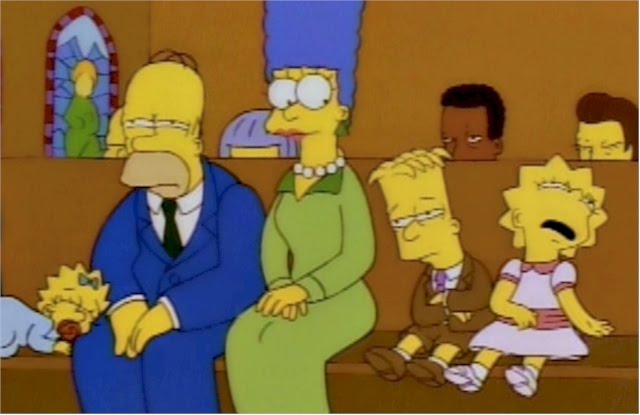
In my perspective, Sunday church services are the most boring sessions I’ve ever been to. I have faith believe in Christ and I’m willing to grow in him, however, I was never able but I’m unable to relate to several of the church sermons I have been to. A The pastor would just ramble week in and week out for 40 to-50 minutes about his life story, and concepts which are dull, repetitive, and boring. In addition to the pastor’s repetitive messages, something I have observed with church pastors is their monotone speaking. There are exceptions,Although I have seen many US pastors be all enthusiastic and hyped for talks, but from my observation, the majority of Asianmany Hong Kong or Chinese pastors would just talk about their life story with a single tone. It felt as thoughwas like their mission to try to bore the soul out of the audience’s body. If now you think sermons are the worst,Albeit I dislike sermons, wait until you hear about youth classes.youth classes in Church are even worst. In adult sessions, churchgoers you would at least be able to learn new content., Wwhereas in youth groups, all you do is read the Bible and reviewlearn about basic concepts. Their content is the identicalsame every year, with minimal to no changes in teaching style. We would engage in small discussions where participants were unenthusiastic and unwilling to share. Overall, church for me is a waste of my energy and time. I have read about the death and resurrection of Jesus for over 10 years, yet it comes up year after year. I appreciate the pastors for willing share their stories and thoughts with us, but please, at the very least, talk with enthusiasm.

Quick Write – What Do You Find Utterly Boring

What do you find utterly boring? No matter how hard you try, it just doesn’t make you come alive. Write about your struggle with boredom.

In my perspective, Sunday church services are the most boring sessions I’ve ever been to. I have faith Christ and I’m willing to grow in him, however, I was never able to relate to several of the church sermons I have been to. A pastor would just ramble week in and week out for 40 to 50 minutes about his life story and concepts which are dull, repetitive, and boring. In addition to the pastor’s repetitive messages, something I have observed with church pastors is their monotone speaking. There are exceptions, but from my observation, the majority of Asian pastors would just talk about their life stories with a single tone. It felt as though it was their mission to try to bore the soul out of the audience’s body. If now you think sermons are the worst, wait until you hear about youth classes. In adult sessions, churchgoers would at least be able to learn new content. In youth groups, all you do is read the Bible and review basic concepts. Their content is identical every year, with minimal to no changes in teaching style. We would engage in small discussions where participants are unenthusiastic and unwilling to share. Overall, church for me is a waste of my energy and time. I have read about the death and resurrection of Jesus for over 10 years, yet it comes up year after year. I appreciate the pastors for willing share their stories and thoughts with us, but please, at the very least, talk with enthusiasm.

Thoughts:

As a student who needs extra time to process information, I was surprised at the speed I was able to identify what I find boring. Not only was I passionate about my topic, but I was also dying to share my thoughts on this specific issue. Throughout my childhood, I have been criticized by my relatives and peers for disliking and skipping church. This quick write allowed me to express my reasoning of why I dislike church and my point of view towards Sunday services.

Original Twist Short Story (Rough Draft)

Original Link:

https://docs.google.com/document/d/1VHiNbaxbHlIi1M5CjqMTgtamYZieB2loTv6EbpcHkZs/edit?usp=sharing

The clock reads 9 am, and Thomas hears a sudden knock on his bedroom door. “Wake up!” shouted Martha. “You said we were going out for breakfast this morning.”, she added. Unwillingly, Thomas shakes himself out of bed, his eyes half-opened, as he covers himself with a white coat. “I’m out”, shouted Thomas, as he puts on his shoes, holding a newspaper under his arm, gathering the keys. “Don’t forget to lock the door”, said Martha, as she travels down the stairs and outside the building. “Where do you want to go?”, asked Thomas. “Let’s try Herman’s Cafe”, replied Martha. “They make the best poached eggs.” 

Holding hands, Thomas and Martha stride across Lane Boulevard, greeting strangers with a warm smile. However, no one replies. “Why is everyone ignoring us?”, asked Martha. Thomas let out a smile, shrugging his shoulders. On the roundabout next to a traffic light, Thomas reaches into his pocket for a 10 dollar bill and hands it to an old lady selling flowers. “Keep the change”, said Thomas, as he grabs a white lily. The old lady stiffens, eerily staring at the couple. Thomas offered the flower to Martha, and they both cross the road to Herman’s Cafe. They enter from the front door and sit on the empty bench at the corner. 

A waiter by the name of Cole greets the couple and asks for their order. “How may I serve you today?”, asked Cole. “I’ll have a plate of pancakes topped with strawberries, and the lady will have poached eggs with toast”, replied Thomas. The waiter recorded their order and disappeared into the kitchen. “We live in a sad reality”, said Martha. “Everyone is so obsessed with their own worlds that no one even notices us anymore”, she said. “Just ignore it”, said Thomas. “Let’s just enjoy this beautiful day”. There was a moment of silence until a waiter places food on Martha and Thomas’ table. “Are you sure this is the right table?”, asked the waiter. “Yes”, replied Cole. 

Thomas and Martha rub their bellies as they look upon their meal. “I’ve missed this so much!”, remarked Martha. “The colorful plating, the comfortable benches, and the striking aroma! I forgot what it all felt like!”, proclaimed Thomas. After resting for a while Thomas calls for the bill.  “That’ll be $26”, said Cole. Thomas reaches into his pocket, but he couldn’t find his wallet. Neither could Martha. “Sorry, we both left our wallets at home”, said Thomas. “Well in that case – ”, suddenly, another waiter interrupts Cole. “Who are you talking to?”, he asked. “What?”, said Cole. The waiter points at Thomas. “There’s no one there”, he said. Cole rubs his eyes and the couple vanished like ghosts. The food was left untouched, the bill unpaid, and the only thing left was a newspaper, dated January 6, 1867. Underneath the date was the photo of a couple, underlined as Martha and Thomas Greene.

Peer Comments:

Nice story, good job with the paragraphs and organization, I liked how you put lots of dialogue in your story. However, it would be nice to have some more details or descriptions to give more power and contrast to the surprise. Make sure to watch out for past and present tense in your writing.

Sarah’s Key Book Review (Rough Draft & Peer Edit)

Link to actual copy:

https://docs.google.com/document/d/1Ahhv2zjLPnusHIIY7FcVxm8BgtmqmZVsqbT2MkWUxV0/edit?usp=sharing

Edwin Mok

Block A

Oct. 16, 2019

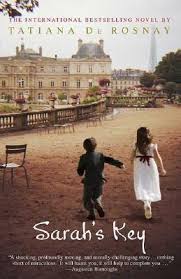
Sarah’s Key, written by Tatiana de Rosnay. Published by ST. MARTIN’S GRIFFIN. Copyright date © 2007. Historical Fiction. “PARIS, JULY 1942: Sarah, a ten-year-old girl, is taken with her parents by the French police as they go door-to-door arresting Jewish families in the middle of the night. Desperate to protect her younger brother, Sarah locks him in a bedroom cupboard – their secret hiding place – and promises to come back from him as soon as they are released. SIXTY YEARS LATER: Sarah’s story intertwines with that of Julia Jarmond, an American journalist investigating the roundup. In her research, Julia stumbles onto a trail of secrets that link her to Sarah, and to questions about her own romantic future.” 

Originally written in French, Tatiana de Rosnay wrote Sarah’s Key as a tribute to the children and victims of the Vel’ d’Hiv’ roundup during 1942. It wasis to those who never came back, and the ones who survived to tell their tales. Inspired by the historical dark deeds of Paris, Tatiana stumbled upon a website describing the rue Nelaton, in the 15th arrondissement, close to her residence. It was where the tragic events of Vel’ d’Hiv took place in 1942. Written as historical fiction, the author rotates back and forth between two stories regarding a journalist in 2002 and a Jewish child who experienced the horrors of the Vel’ d’Hiv. In many ways, this book is informative with unique information concerning France’s role during the Holocaust, yet it doesn’t fail to provide an emotional connection between the audience and its fictitious characters (not based on a true story).

Sarah’s Key revolves around two characters, Sarah and Julia Jarmond. Sarah was a ten-year-old Jewish girl in Paris who was taken away during the Holocaust, whereas Julia Jarmond wasis a journalist investigating the Vel’ d’Hiv roundup during this time period. From Sarah’s story, most of her supporting characters were drawn as insignificant and two-dimensional. From her friends to her parents, all we had was a glimpse of their present states, not their past nor their futures. It never explains who Sarah’s parents were or their thoughts throughout the book. As for Julia, her family is painted with more descriptions and more dimensional. The Tezacs (Julia’s family) are discussed with a richer history and are shown in a wider range of emotions. Many characters have a clear and excellent development, whereas other characters are merely providing a necessary platform to enrichen the connection between Sarah and Julia. For example, readers were introduced to Julia Jarmond. Throughout the book, she starts off as a typical American journalist whose largest concern is whether or not she pleases her husband. Towards the end, she becomes a woman who has somehow increased in maturity and confidence at the age of 45 and connected with one of Paris’ darkest years. Her relationship between her husband and love turned to become the least of her concerns. 

A major theme or event the book circles around is the Vel’ d’Hiv roundup in 1942, motivated by the Holocaust. The book starts off by creatively educating readers about what the Vel’ d’Hiv is and how it has affected thousands of Jewish Parisian families. However, towards the end, the theme shifts to a more public approach of the event, on how the roundup in 1942 has affected Parisians, includingeven non-Jewish families. The theme changes from initially a historical fiction revolving around the victims from the Vel’ d’Hiv to a more modern and relatable fictional story involving present-day approaches and issues. It explores a more realistic perspective Parisians have towards the Vel’ d’Hiv.

As mentioned above, Sarah’s Key focuses on two plots, Sarah’s and Julia’s. They bBoth have their unique styles and are written in distinct voices and tones. Throughout the plot, characters are introduced at different times with different techniques. The author did exceptional work with the timing of each character’s introduction, as it added value to the plot whilst revealing mysteries and secrets during the most suitable spots. These mysteries and secrets are what ties both plots together, despite a sixty-year gap. For Julia’s plot, she has multiple subplots/issues which help enrichen her character development. The different complications she experiences are well written and provide readers with multiple areas containing suspense and sub-climaxes. For example, not only does Julia face issues concerning the dreadful events from 1942 and Vel d’Hiv, but she is also tasked in dealing with life in Paris as an American alongside a troublesome spouse. Her plot thoroughly explores the different concerns she has, and how it affects her approach to the connection between her and Sarah.

Both plots are set in Paris but with different time periods. Sarah, born in 1932, lived in a time of despair and darkness from the Holocaust. At the age of 10, Sarah’s story consisted of solely concentration camps and mental torture. ThisHer setting effectively develops Sarah into a cold character, a necessary quality that helps the plot develop more smoothly. As for Julia, her story starts off in Paris, 2002. As a journalist, Julia has the chance to research concentration camps in France during the Holocaust, and soon develop a connection between her family and Sarah. Her family members help provide an effective setting for Julia to continue her discoveries in the connection between her and Sarah, whilst also providing Julia with revelations and issues regarding her own personal life. 

The final copy of Sarah’s Key was formatted in a creative way, with Sarah’s story and Julia’s switching back and forth from chapter to chapter. This type of formatting is effective when the author reveals the book’s mysteries so that neither plots would reveal necessary secrets at too early a time or too late. The imagery painted throughout the writing is done effectively, as the author is able to add details or prolong a moment to further provide readers a clear image of each scene or conversation. The vocabulary the author uses is mature but common, with words such as blatant and velour being the most challenging ones. She also occasionally includes French sayings and foul language, thus making the book inappropriate for younger teens.

The reading level for Sarah’s Key isn’t high, but at times it may be inappropriate for children under the age of 12. Albeit the language usage isn’t at an advanced level, this book deals with issues relatable to adults, especially a parent. The level of maturity required to read this book is high, therefore I would highly recommend Sarah’s Key to maturegrown students and adults who are interested in a book providing an emotional connection between the characters and its readers.

SAT Essay 3

In the article written by Nicholas Kristof, he claims that poverty during the 21st century has declined more than 50% from the initial amount over the past 20 years. Unfortunately, based on numerous polls researched by the author, approximately 90% of Americans believe that global poverty is steadily increasing rather than decreasing. To Nicholas, this belief from the Americans is an issue within society and media. He aspires to educate the world on the steady decline of extreme poverty over the 21st century, and also acknowledge those who have contributed greatly in their attempts to eradicate or decrease the rate of poverty.

When writing this article, author Nicholas Kristof understood that most of his audiences or readers were unaware of the steady decline in extreme poverty rates around the world. According to his studies, most of America is unaware of the improvements made towards poverty. Under this assumption, the author bullet-pointed a series of facts to persuade the audience that his claim of a decline in poverty is true. For example, he uses studies shown by World Bank to support his claim. The use of actual evidence may influence the beliefs of readers and shift their perspective on poverty in the 21st Century. 

As mentioned in the previous paragraph, the author acknowledges that many readers believe in the increase and worsening of poverty. He supports his claim with evidence such as polls and results, but more importantly his insight into why many readers believe in such notions. According to the author, it is because of misperceptions painted by the media. When observing the trends of media, journalists tend to focus on the flaws of humanity and human misery across the world. It leaves readers with the misperception that everything is steadily becoming worse. This insight provided by the author was able to allow us as readers to clearly understand why many Americans and/or foreigners have the misperception that poverty and other global issues are getting worse. His insight also highlights why misperceptions painted by the media is a significant problem amongst society. Upon closer inspection, in this short paragraph, the author wrote analyzing misperceptions also allows us as readers to develop an idea as to why the author chose to write such an article.

When the author mentions journalists focusing so much on human misery creating a misperception among society, it reveals to us as readers as to why he chose to write about the topic of declining poverty. As a journalist himself, Kristof believes that our society nowadays is surrounded by so much negativity presented by journalists, we often misinterpret global issues and tend to perceive these issues as worsening. Through this belief, the aim of this article is to decrease the negativity encircling readers and inform them that there is hope when dealing with global issues like poverty. As mentioned by the author, many journalists focus on the flaws in poverty and the worst cases provided by the issue, but this article was written to show audiences that poverty is not an issue that is worsening as painted by the media. The author intends to educate readers that many articles are written tends to focus on the negatives, or in other words one side of the story.

From the start to the end, the author clearly states his claim that poverty is steadily decreasing unlike the misperception from society who perceives poverty as an issue which is increasing. Not only did he provide factual evidence to support his claim, but he also presented personal insights as to why society perceives poverty in a worsening manner, and how poverty is being changed by individuals who contributed to eradicate poverty. 

Reflection:

This being the first time I have ever written or approached an SAT essay, I found this assignment the most challenging and demanding. The time limit placed on this assignment increased the pressure when writing the essay, making this writing more difficult and stressful than it is. Furthermore, being doubtful of my ability to analyze writing and identify writing techniques, I was unable to provide an insightful analysis on the given article. I received a low score for this piece of writing, and it is evident as my essay sounded rushed, the insight and analysis provided was shallow, and there were multiple errors throughout the essay.

Original Copy (With Peer Comments)

https://docs.google.com/document/d/1KJj4_U8_zx8i_JODHGGqPnoMGMxX7t4lyXSRYK_FFAQ/edit?usp=sharing

Original Twist Short Story

The clock reads 9 am, and Thomas hears a sudden knock on his bedroom door. “Wake up!” shouts Martha. “You said we were going out for breakfast this morning.”, she adds. Unwillingly, Thomas shakes himself out of bed, his eyes half-opened, as he covers himself with a white coat. “I’m out”, screams Thomas, as he puts on his shoes, holding a newspaper under his arm, gathering the keys. “Don’t forget to lock the door”, Martha says, as she walks down the stairs and outside the building. “Where do you want to go?”, Thomas asks. “Let’s try Herman’s Cafe”, replies Martha. “They make the best poached eggs.” 

Holding hands, Thomas and Martha stride across Lane Boulevard, greeting strangers with a warm smile. However, no one replies. “Why is everyone ignoring us?”, Martha questions. Thomas lets out a smile, shrugging his shoulders. On the roundabout next to a traffic light, Thomas reaches into his pocket for a 10 dollar bill and hands it to an old lady selling flowers. “Keep the change”, he says, as he goes for a white lily. Looking at the couple, the old lady stiffens, eerily staring at them as they cross the street. Thomas offers the flower to Martha, right outside the front steps of Herman’s Cafe. They enter from the front door and sit on the empty bench at the corner. 

A waiter by the name of Cole greets the couple and asks for their order. “How may I serve you today?”,  he asks. “I’ll have a plate of pancakes topped with strawberries, and the lady will have poached eggs with toast”, replies Thomas. The waiter records their order and disappears into the kitchen. “We live in a sad reality”, says Martha, out of the blue. “Everyone is so obsessed with their own worlds that no one even notices us anymore”, she continues. “Just ignore it”, Thomas replies. “How about we just enjoy this beautiful day”. There was a moment of silence before a waiter sets food on Martha and Thomas’ table. “Are you sure this is the right table?”, asks the waiter. “Yes”, Cole yells. 

Thomas and Martha rub their bellies as they look upon their meal. “These bring back memories!”, Martha remarks. “The colorful plating, the comfortable benches, and the striking aroma! I forgot what it all felt like!”, proclaims Thomas. With their eyes wide and spit oozing out of their mouths, they both sit in satisfaction. There was complete silence until the end of their meals. Thomas calls for the bill. “That’ll be $26”, said Cole. Thomas reaches into his pocket, but he couldn’t find his wallet. Neither could Martha. “Sorry, we both left our wallets at home”, replies Thomas. “Well in that case –  ”, suddenly, another waiter interrupts Cole. “Who are you talking to?”, he asks. “What?”, responded Cole. The waiter points at Thomas. “There’s no one there”, he says. Cole rubs his eyes and the couple disappeared like ghosts. The food was left untouched, the bill unpaid, but what was left was a newspaper, dated January 6, 1867. Underneath the date was the photo of a couple, underlined as Martha and Thomas Greene.

Reflection:

When writing my twist short story, I went through multiple shock endings which sounded excellent initially. However, I later found it tough to translate these endings into a short story. To write a short twist story, I realized that the story relies heavily on minor details which contribute to the surprise factor of the ending. As an inexperienced writer, I found it difficult to implement the crucial details or hints which help build the suspense of the climax towards the end. Thus my twist sounded somewhat underwhelming and weak. The twist was unexpected, however, the reaction and surprise I received from the reveal were lacking.

CREDO Presentation

Thoughts:

Arguably one of the most difficult writings to brainstorm, it took me days to figure out the perfect topic to share with the class. The challenge of having to recall an impactful story and the pressure of sharing in front of class only increased the difficulty of this project. Fortunately, I was able to remember a moment in my life which not only was amusing to the audience, but also fulfills the requirements of a credo. This particular account was impactful towards my life, memory, and beliefs.

Link to all Slides and Speaker Notes:

https://drive.google.com/file/d/18Kvs0V99P_B-f4lXqyf5oyH2tqQJ7Mya/view?usp=sharing

Sarah’s Key Book Review

Originally written in French, Tatiana de Rosnay wrote Sarah’s Key as a tribute to the children and victims of the Vel’ d’Hiv’ roundup during 1942. It was written to those who never came back, and the ones who survived to tell their tales. Inspired by the historical dark deeds of Paris, Tatiana stumbled upon a website describing the rue Nelaton, in the 15th arrondissement, close to her residence. It was where the tragic events of Vel’ d’Hiv took place in 1942. Written as historical fiction, the author rotates back and forth between two stories regarding a journalist in 2002 and a Jewish child who experienced the horrors of the Vel’ d’Hiv. In many ways, this book is informative with unique information concerning France’s role during the Holocaust, yet it doesn’t fail to provide an emotional connection between the audience and its fictitious characters (not based on a true story). A recurring theme amongst Tatiana’s stories is family. In books such as Sarah’s Key, A Secret Kept, The Rain Watcher, and A Paris Affair all explore the relationships between families and their secrets. From her writing, Tatiana excels at creating issues and plots dealing with marriage, siblings, and parenthood.

Sarah’s Key revolves around Sarah and Julia. Sarah was a ten-year-old Jewish girl taken away during the Holocaust, whereas Julia was a journalist investigating the Vel’d’Hiv roundup. In Sarah’s storyline, most of her side-characters were drawn as two-dimensional. As for Julia, her family is painted with more descriptions and significance. The Tezacs are discussed with a richer history and are shown in a wider range of emotions. Many of her characters have a clear development, even insignificant figures who merely provide a platform to enrichen the connection between Sarah and Julia. 

A major theme the book circles around is grief. From the introduction of the horrors of the Vel’d’Hiv to the deaths during the Holocaust, grief is experienced throughout the book by the majority of characters. Not only did the author excel in painting each character with grief, but her ability to capture their emotions and expressions of grief allowed me as a reader to empathize and emotionally connect with the fictitious characters. 

Sarah’s Key focuses on two plots. Both have their unique styles and voices. The author did exceptional work with the timing of each character’s introduction, as it added value to the plot whilst revealing secrets during suitable spots. For Julia, she has multiple subplots that enrich her character development. The different complications she experiences provide readers with multiple areas containing suspense and sub-climaxes. They thoroughly explore her different concerns, and how it affects her approaches and decisions. 

Sarah, born in 1932, lived in a time of despair. Aged 10, her story consisted of solely concentration camps and mental torture. This setting effectively develops Sarah into a cold character, a necessary quality that helps the plot develop. As for Julia, her story starts off in Paris, 2002. She had the chance to research the Vel’d’Hiv in France, and discovers a connection between her life and Sarah’s. Her family members provide an effective setting for Julia to continue her discoveries in the association between her and Sarah, whilst also providing issues regarding her own personal life. 

The final copy of Sarah’s Key was formatted in a creative way, with Sarah’s story and Julia’s switching back and forth from chapter to chapter. This type of formatting is effective for the author to reveal the book’s mysteries so that neither plots would reveal spoilers too early nor too late. The imagery painted throughout the writing is done effectively, as the author is able to prolong a moment to further provide readers a clear image of each scene. The vocabulary the author uses is mature but common, with words such as blatant and velour being the most challenging. 

The reading level for Sarah’s Key isn’t high, but it is inappropriate for children under the age of 12. It deals with issues relatable to parents and adults, and the level of maturity required to read this book is high. I would recommend Sarah’s Key to mature students and adults interested in a book providing an emotional connection between the characters and its readers.

Thoughts:

When writing my book review for Sarah’s Key, I felt like I had a lot to say because of my interest in the book and the satisfaction I received from the book. However, the implementation of a 500 word limit on this piece of writing forced me to put my thoughts into a clear yet concise manner. I was unable to write my full detailed analysis of the book, but instead, summarize the main points of my thoughts and ideas. It was frustrating at first, but I was able to adapt and identify the main points of my analysis.

Design a site like this with WordPress.com
Get started